

Wordplay With Robert MacFarlane: An Important act of environmental and social justice – Loving the Imperfect
“Lover of woods, of words, of flowers,
Lover yourself of the things I love,
Friendship was made of the quiet hours
Hung between earth and the sky above.”
-Vita Sackville-West
A dedication to Katherine Drummond in her collection of poetry The Garden, 1946
Thanks for reading! Subscribe for free to receive new posts and support my work.
When I was in college, I used to get up every morning and hook my bike on the back of my little Ford Focus and ride up the Paint Creek Trail in my hometown. The wide dirt path is almost 9 miles long and follows the Paint Creek north from Rochester, MI to Lake Orion, MI. It was one of the first rails to trails projects in the US. Riding this trail every morning in the quiet fog with the crickets and the chirping birds was always nostalgic for me because it brought me back to my roots. I can feel my ancestors and my own history every time I’m on that trail. My grandma used to take me on walks down it in the summer and she’d point out the different flowers, and my friends and I used to swing on a rope over the river at the Dutton Road crossing and drop ourselves into a deep zone in the river. I walked with friends and biked with friends and cross country skied with friends up and down that trail in all seasons. And my great grandpa used to grate the roads that crossed the trail and he’d sit in his truck along the dirt roads near it and pray his prayers to the Blessed Mother while he ate his lunch.
It was in my college years riding the Paint Creek Trail that I became interested in the wildflowers that grew along it. It was funny to me that there were so many different flowers in nature, and I didn’t know their names. So, I started a little study. I bought a Michigan wildflower book that not only told me the names of these flowers but also their function and history. Soon I came to know the flowers by heart, I knew their preferred season. I knew their stories. I started to love them on a deeper level because they were more a part of my story this way.
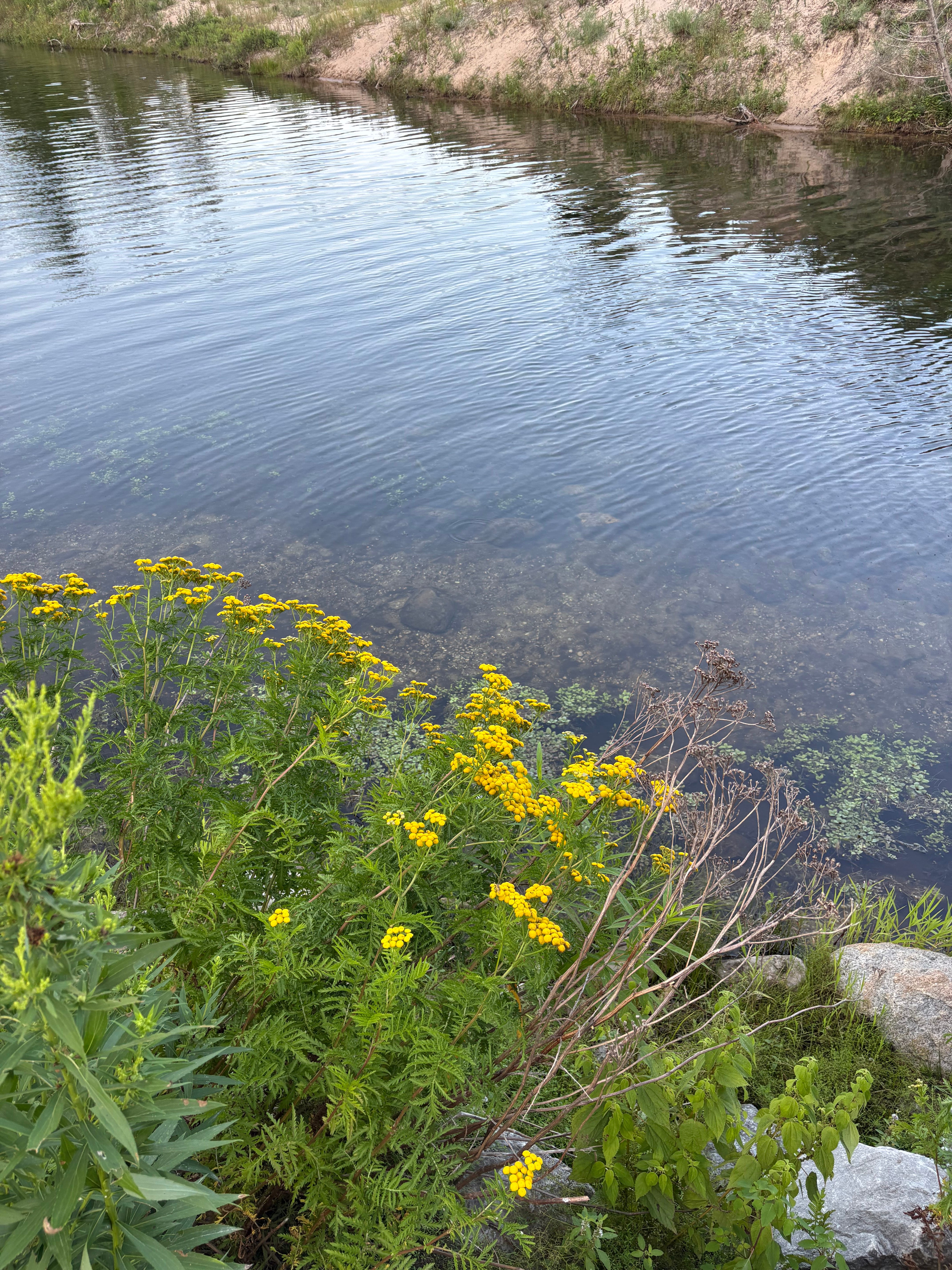
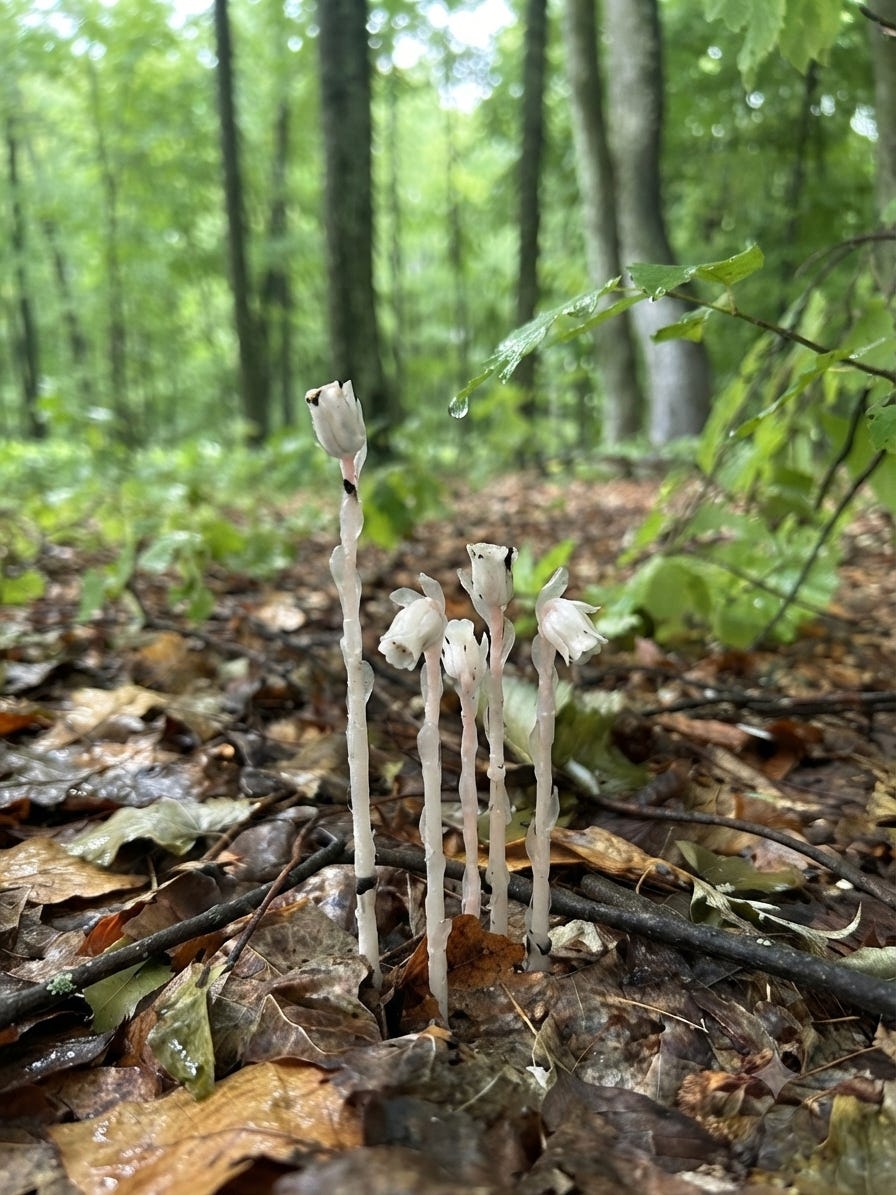
I had my favorites too. I love Common Tansy because it is rare to see, and it stands so upright and flat and if you cut and dry the yellow flowers they last forever as decoration or a gift. I think Queen Anne’s Lace is one of the more beautiful wildflowers out there, and there’s Indian Pipe that is illusive and strange, haunting in its rarity. It has a white stem and a white flower because it grows only in dense forests where there is no sun. If you see it in the wild it almost frightens you.
For the past couple of weeks, I’ve been listening to the podcast Folk on Foot. The host and creator, Matthew Bannister of the UK takes nature walks with his guests, who are famous folk musicians in the UK. They talk about land and lyrics, and they often pause in the midst of history to sing a song or three. A frequent guest on the show is the environmental author, Robert Macfarlane.
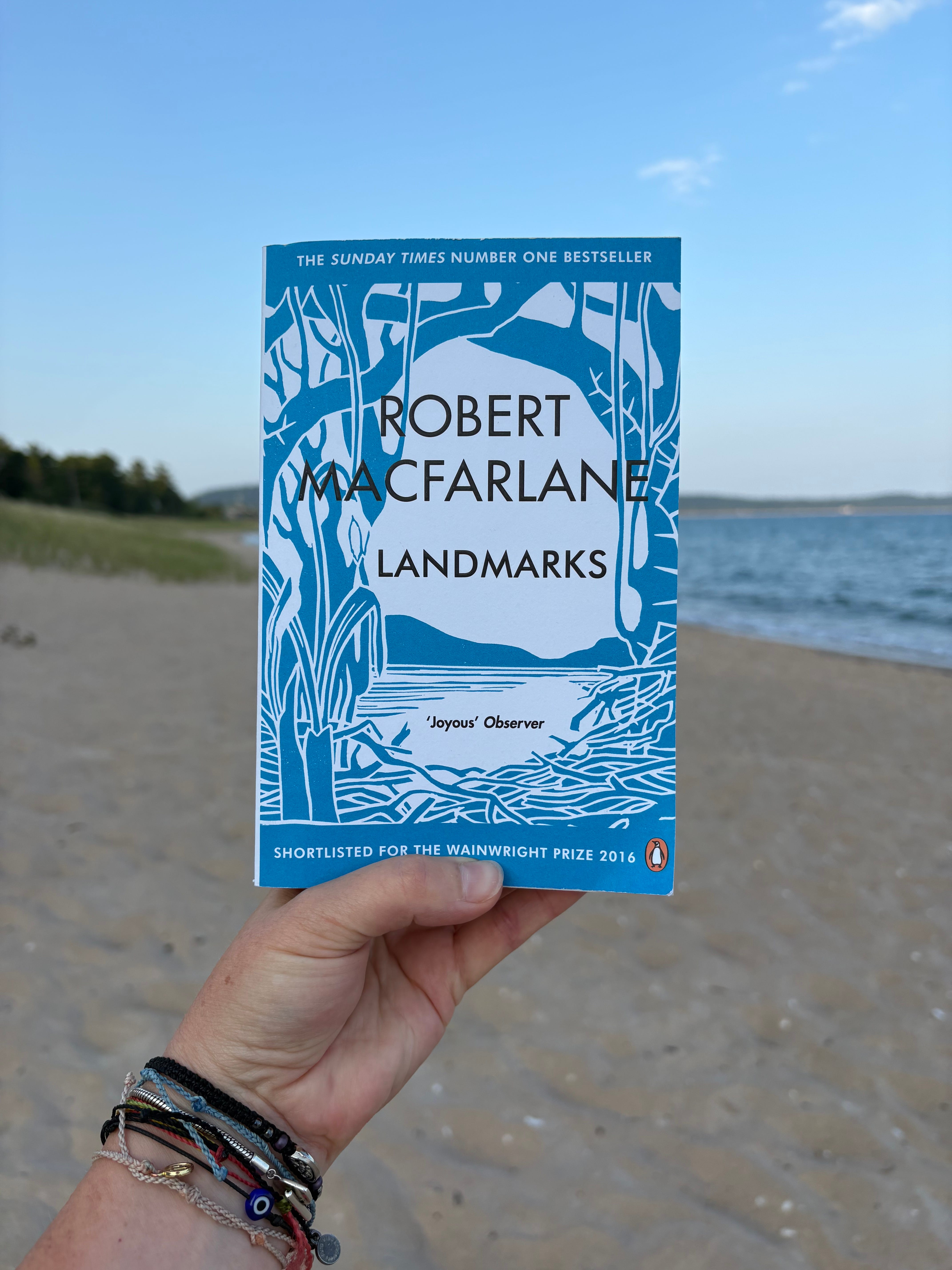
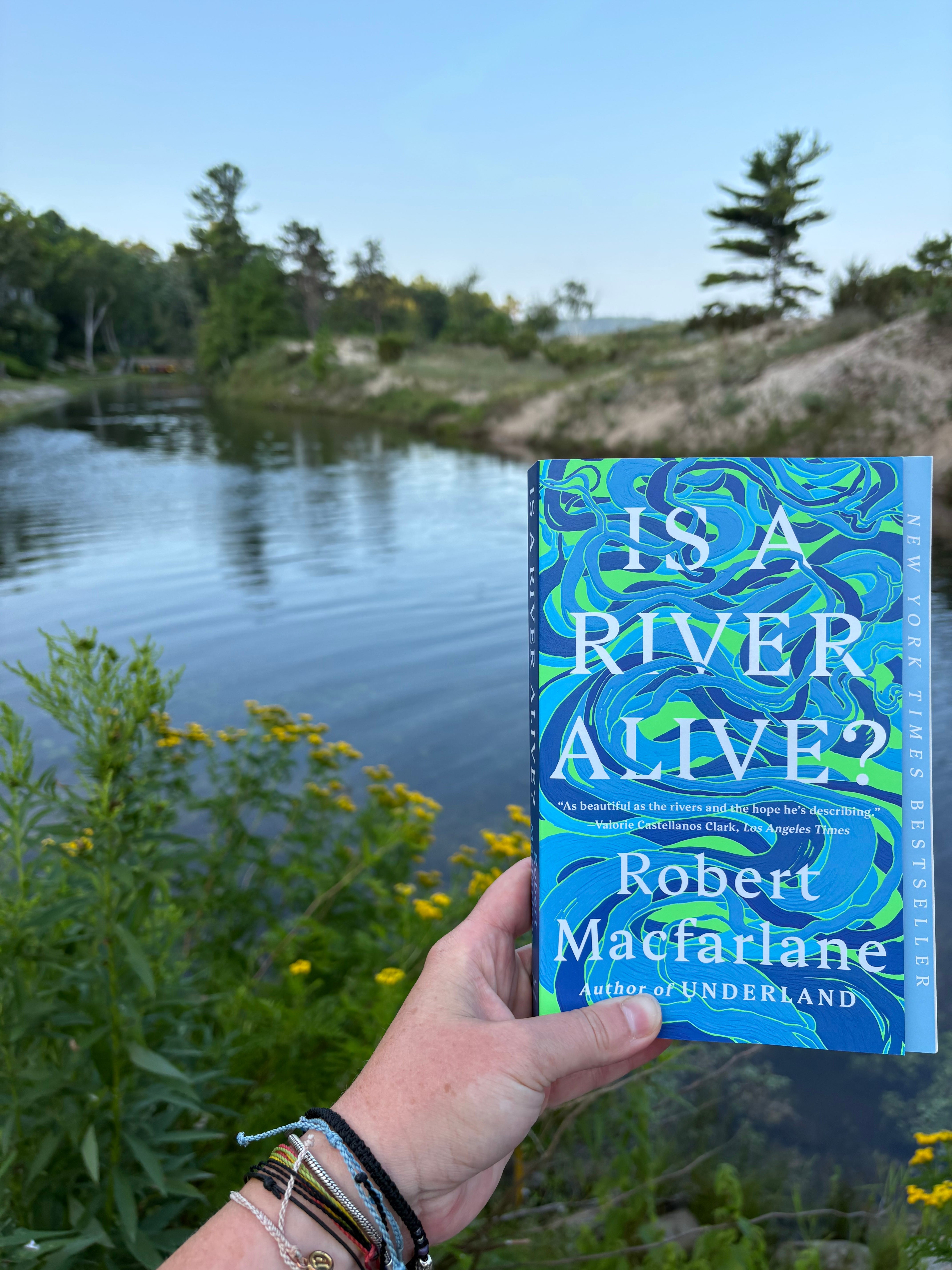
Macfarlane has published many books on the subject of safekeeping nature words that for whatever reason have disappeared from the lexicon of world languages. When I was up north last week (which is a thing we say in Michigan when we travel to the northern part of the state) I spied two of his books in the bookshop in the northern town of Glen Arbor and I bought them. I started reading Landscapes right away, and its already changing the way I think about nature and words.
When a new edition of the Oxford Junior Dictionary was published, he writes that a “sharp-eyed reader” had noticed some nature words had been taken out of the collection. “Under pressure, he writes, “the Oxford University Press revealed a list of the entries it no longer felt to be relevant to a modern-day childhood. The deletions included acorn, adder, ash, beech, bluebell, buttercup…”
The list goes on from there.
“dandelion, fern, hazel, heather, heron, ivy…”
These words were omitted to make room for words like “attachment, block-graph, blog, broadband, bullet-point…”
When Macfarlane confronted the person responsible for the deletions of these nature words the defense was that the press needed to “reflect the consensus experience of modern-day childhood.”
He writes, “It is true that once a landscape goes undescribed and therefore un-regarded, it becomes more vulnerable to unwise use or improper action.”
He uses the example of the Lewisian Moor in 2004 when an engineering company wanted to destroy it for a wind farm. The community fought the project in vain for a while because they didn’t have the language to describe the importance of the land. It wasn’t until a group of people started to walk the moor and notice and name the creatures and plants that lived on the moor that they were able to compile a collection of nature words, poetry, history, and stories that would ultimately save the moor and safeguard it for generations to come.
This is an important story and one I think we can look to when the data centers and other projects start invading the landscape more and more. How are we going to save the land for future generations if we don’t have the words and the history and the stories to pass down. Nothing will seem important enough to save if we don’t make an effort to connect with these landscapes, if we take the names of flowers, birds, and mammals out of our dictionaries.
Landscapes is a glossary of lost words Macfarlane hopes will be remembered.
Words like leabaidh liatha (lee-be-id lay-uh-tha) which is a Gaelic phrase meaning a “mossy bed where the cattle lie at a distance from the shieling.” And rafty, weather that is “misty, dampy, and cold” from Essex. And Summer geese which refers to the steam that rises from the moor when rain is followed by hot sunshine from North Yorkshire.
And honeyfur, made up by a five-year-old girl referring to the “soft seeds of grasses held in the fingers.”
He encourages readers to come up with their own lexicon for the landmarks and landscapes of our lives.
Here’s a couple (maybe silly ones) I came up with:
Heartstone: a stone I like to pick up from the beach and take home with me.
Leaflight: The sunlight that shines through the tree leaves making their color bright green, yellow, orange…
Soul morning: Refers to a morning when I sit in the yard and everything is peaceful and my soul feels restful and happy.
What are your landmark words?
Feel free to share them in the comments or in your private journals.
You can find the Folk on Foot podcast HERE.
My Substack transcript with photos is HERE.
All about Robert Macfarlane HERE.
Thanks for reading! This post is public so feel free to share it or leave a comment!!


