
Wordplay With Robert MacFarlane: An Important act of environmental and social justice – Loving the Imperfect
“It often happens that an old, rough hedge occurs somewhere in a garden; a hedge which presents a problem. Too heavy a job to grub out, too expensive to replace, and giving no pleasure to the eye, being composed of a thorny rubbishy mixture, usefully dense but unaesthetic. It is possible to add some interest and color by planting climbers to ramble along and over this sort of inherited relic.
These climbers will have to be tough. They will have a great deal of competition to put up with…”
-V. Sackville-West
A Joy of Gardening
1958
Thanks for reading! Subscribe for free to receive new posts and support my work.
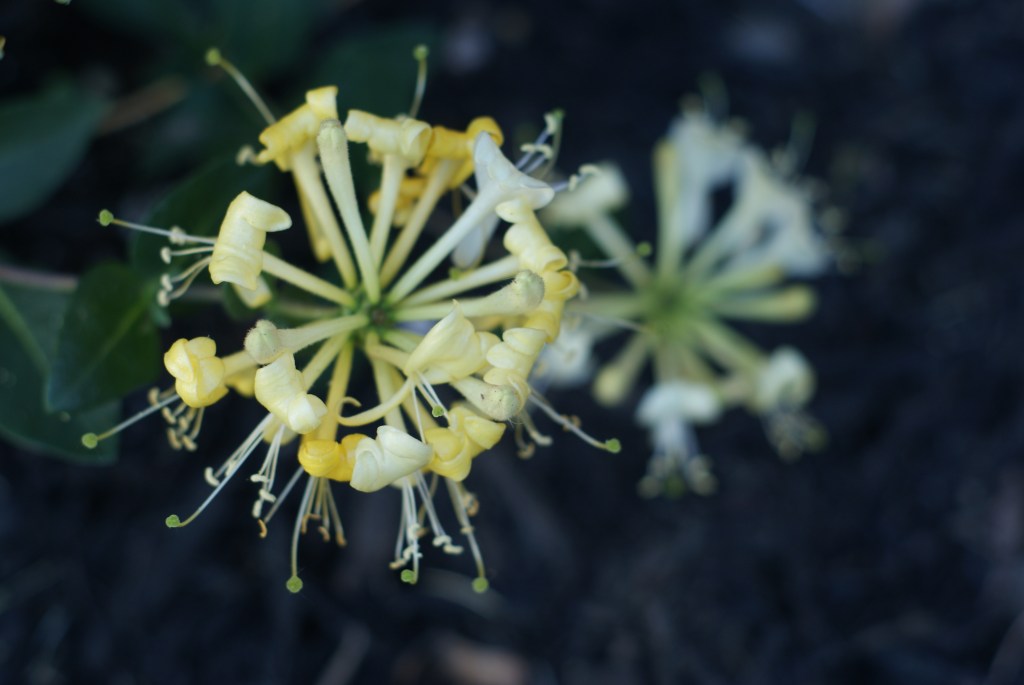
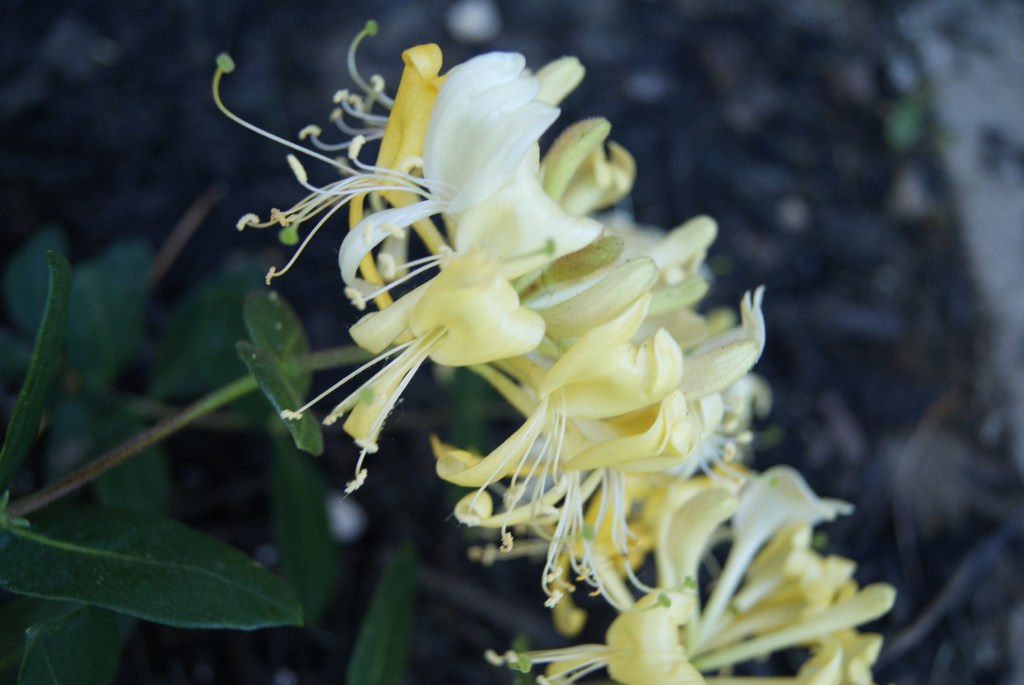
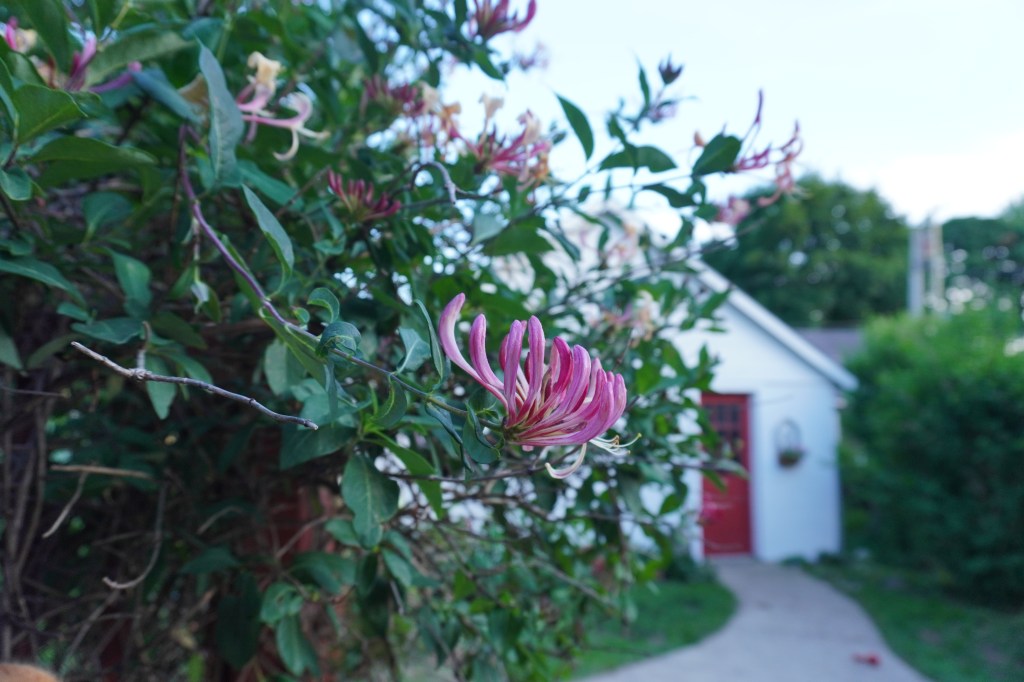
Honeysuckle. Its name alone suggests something fairytale-like. Vita mentions honeysuckle climbers on three separate occasions in her book A Joy of Gardening. She mentions them for this purpose: to cover a problem. I was intrigued by the idea of climbers when I first got into gardening, because there were parts of our old deck that I wanted to cover for more privacy. Climbers are good for this. Though honeysuckle won’t bind itself to a building, the little tendrils find a way to the sky by curling around a stable structure. My honeysuckle took very well to my planting it in full sun years ago, and I gave it a sturdy support of our little pergola entranceway at our backdoor.
Vita explains, and this is what I love about her, that climbers (strong ones) can be used to cover an unsightly hedge that is too difficult to take out. Honeysuckle or a fall-flowering clematis would do very well in this situation. I love that she thinks outside of the box here and uses a more creative approach. Instead of killing an entire hedge of very old, established bushes, let a flowering climber ramble through and create something new by allowing both plants to coexist on the same stretch.
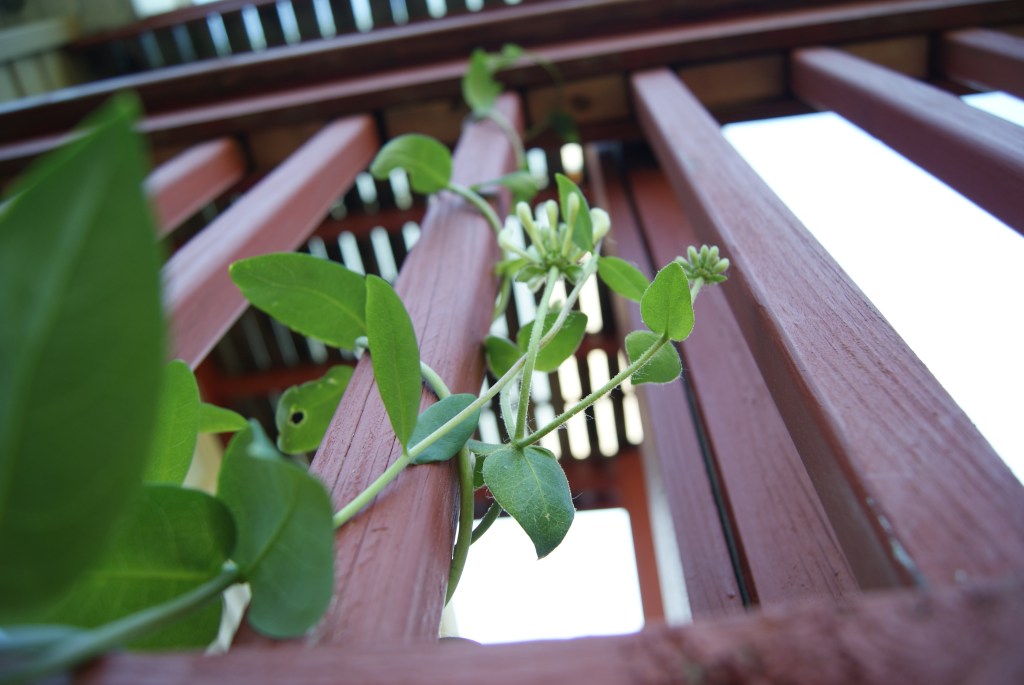
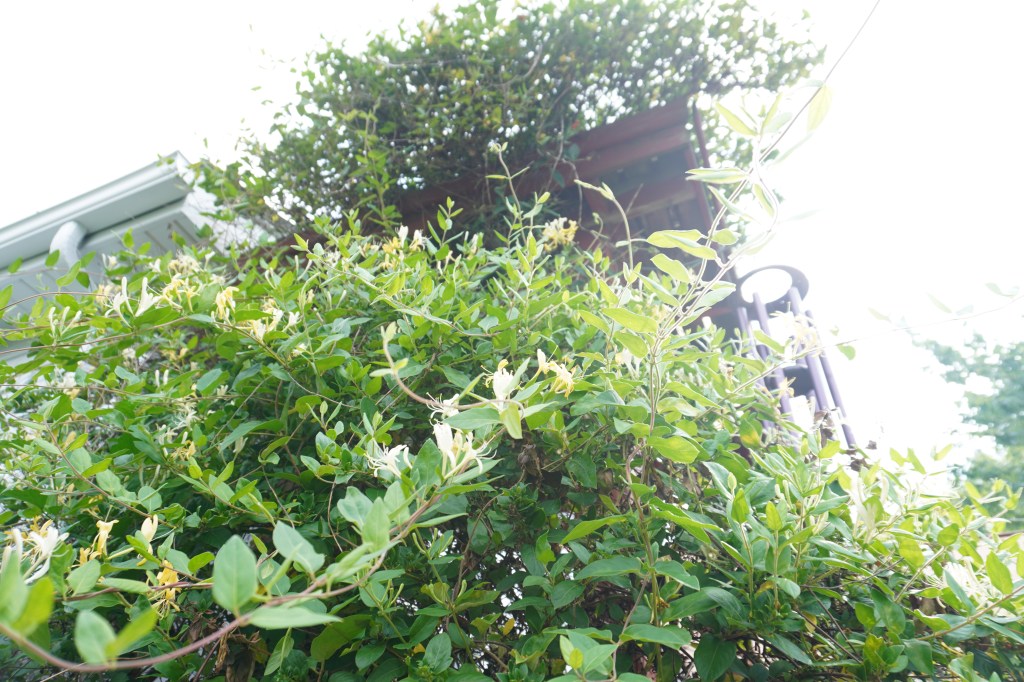
If anyone out there is going to experiment and do this. I would suggest keeping a close eye on the climber in the bush, cutting the climber back if it seems to be choking out the hedge. But I think Vita’s purpose might have been just that. To let the old hedge die after many seasons with only its roots and brittle bones to keep the climber in the sky.
I see God in nature. Being in the garden or the woods is my way of reminding myself where I came from. The garden can be a metaphor for many things. In these articles and episodes (if you’re listening on the podcast) I use the garden to create meaning for our lives as humans.
*Contemplation Prompt: How do we or our communities represent the old, established bush? What are the secret yearnings of our soul(s) that would promote creativity and newness in a community or in ourselves?
Since college I’ve been a nonfiction writer/journalist. I was the local history journalist here in metro Detroit for an online media source called Metro Mode. Then I dared to write a novel. I remember a woman told me after she read it that she thought I was a better nonfiction writer. Luckily, by this point I had already established myself within myself as a novelist. I had already had a short fiction story published and some poetry too. Otherwise, what she said could have destroyed my growth as a writer. I would have kept doing the same thing year after year, never imagining I could introduce something new to my repertoire.
Last summer, wanting to try something new. I decided I would spend my free time learning more about poetry. I joined a writing community called Versed that included a very active poetry workshop, I subscribed to the New Yorker to read the latest poems and short stories coming off the press. I listened to the New Yorker Poetry and Poetry Unbound podcasts religiously, and I visited my local library to rent every poetry book I could, because I felt there was something in me. Something yearning to escape and be seen, something needing to be said. I saw a contest asking for poems from women about women. It was asking contestants to submit fifteen poems by November. So, this gave me something to work toward, which is a huge motivator for me as a writer. I can work with deadlines.
I worked all summer learning about poetry, and I submitted one poem of my chapbook to the poetry workshop of the Versed Community every week until the submission date. Then, I submitted my collection and a few months later, on a snowy night in March I learned that my manuscript, although it did not win the contest, was accepted for publication out of 300 submissions. Since, I’ve found new life in poetry.
Yes, I had always dabbled in it, but now I consider it a serious artform that can transcend meaning beyond the page, beyond the garden, beyond myself. I believe this is what Vita was doing with that hedge. Just because you were established to be something doesn’t mean you shouldn’t try to reach beyond that definition, like the woman who told me I was a better nonfiction writer. She wanted to see me stay a bush, but I knew the truth, I had flowering tendrils in me that yearned to reach for the sky.
…And I hope you do too. Plant them. Let them grow.
Thanks for reading! This post is public so feel free to share it.

Brianne Turczynski is an award-winning author and educator in Michigan as well as the creator of Loving the Imperfect podcast. Her nonfiction, fiction, and poetry have appeared in various magazines and online news publications including Halcyone, 3288 Review, Sheepshead Review, Michigan Out-of-Doors, and Planet Detroit News. Her nonfiction, Detroit’s Lost Poletown: The Little Neighborhood that Touched a Nation was released with the History Press in 2021. Her forthcoming collection of poetry, Lake of Our Histories will be released with Finishing Line Press late in 2026. She attends Duke University’s Divinity School with plans to obtain her Master of Divinity degree. You can learn more about her by visiting her website, www.BrianneTurczynski.com


Dear Girl, So nice to read about Vita, which brings back many memories of past times spent happily in her garden at Sissinghurst. We lived not far away, and it was our favorite haunt to escape to. And, they provided wonderful “Cream” teas in a tiny tearoom. The gardens are just wonderful as you know. I think I mentioned that I read her husband’s diaries.
I read your new bio. I am sooo proud of you.
Love and blessings on you. Kathryn
>
LikeLiked by 1 person
Thank you, Kathryn! I would love to visit Sissinghurst someday. I’m trying to do more posts on her lately. I have a lot of work ahead of me with school starting soon, so I’m figuring out the balance. 😅
LikeLike