

Wordplay With Robert MacFarlane: An Important act of environmental and social justice – Loving the Imperfect
“The narrowest crack in a path or paved terrace will surprisingly send up the finest seedling; I have known even such large unwanted subjects as delphiniums and hollyhocks to make the attempt. The reason, obviously, is that they never suffer from either excessive moisture or excessive drought, the stone preserves such moisture as is in the soil but prevents the soggy puddling consequent on a heavy rainfall; furthermore, it protects from the scorching sun and consequent wilting which demands the watering can.”
-Vita Sackville-West, A Joy of Gardening, 1958
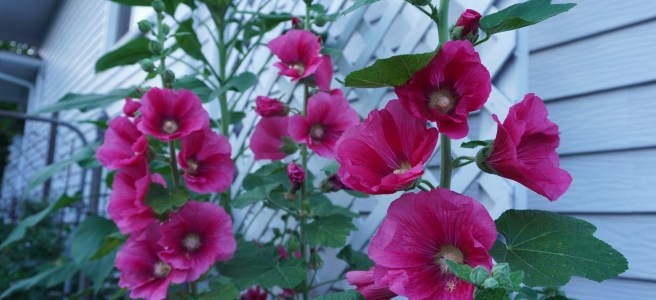
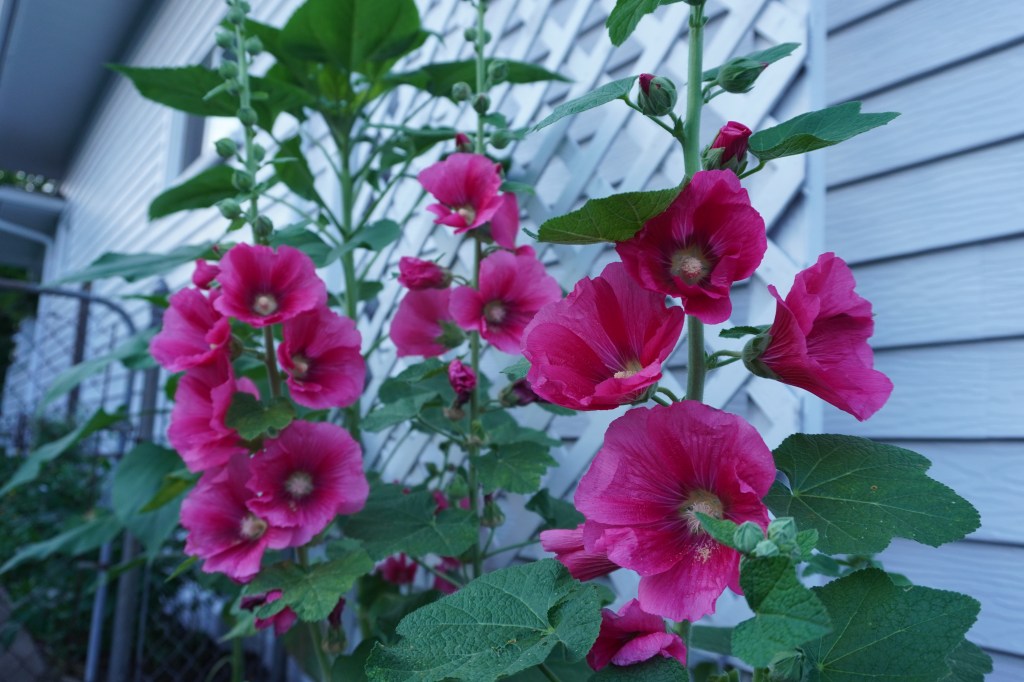
I planted my first hollyhocks as full-grown plants from the greenhouse about eight years ago. They were gorgeous then, and the years that followed were the same as they kept coming from seed. Then suddenly they stopped. The last few years I have had no hollyhocks grow except for a few sorry-looking plants that eventually caught the rust fungus and died. I gave up on them. But look! I can’t believe my hollyhocks this year, growing almost right out of the garden path. They like the warmth from the stone and lack of water there. I didn’t plant them or do anything at all. They just surprised me out of nowhere, growing from seeds dropped years ago and forgotten.
Every year when my family and I head up north to the cabin for the Fourth of July, my mom and I marvel at the hollyhocks that grow wild from 100-year-old seeds in random places around the downtown area of Oscoda. These plants, growing against old barns and buildings right out of neglected parking lots, are time capsules of the historic gardens that used to exist there, long forgotten and paved over. So as the hollyhock is a time capsule carrying history and nostalgia, I allowed the magnificence of this flower to take me back to the days when I sat at my little blue laptop computer years ago and typed out weekly blog posts about gardening based on the writings of Vita Sackville-West, my gardening muse and mentor.
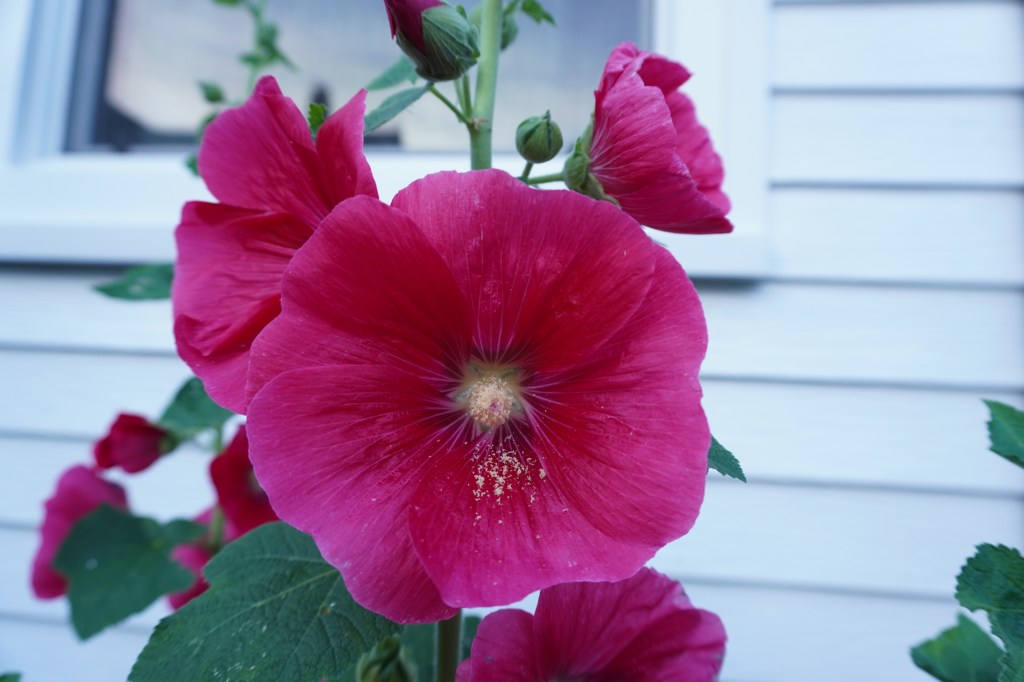
I realize now, based on what Ms. Sackville-West wrote above, that the reason my hollyhocks died out years ago was probably because I watered the area excessively to make happy my other flowers. I had forgotten or did not know that the hollyhock thrives on drought and neglect.
Quite an empowering thought, to thrive on drought and neglect. And to be such a strong plant too, in such conditions, is a thing of marvel. The hollyhock blossoms all by itself. Alone. It doesn’t care who sees it. It is not concerned about its followers or who admires its beauty. Instead, it is there, year after year, growing in the same spot in the sun out of its own nature of generosity.
The hollyhock offers us an important lesson, to live and move toward love in the world without concerning ourselves with negative opinions or expectations of our communities, our families, or friends. I’ve noticed most expectations come from negative mindsets that are based on a person’s fears or doubts. Sometimes people will try to give us their fear and doubt wrapped neatly in what looks like “care and concern”. But they are actually trying to pass along the burdens they have been carrying from their families, their neglect, their droughts. They didn’t thrive in those conditions. Humans aren’t meant to. We are not like hollyhocks, perhaps. Under these conditions, people wither, never truly blossom, and usually die in some fashion.
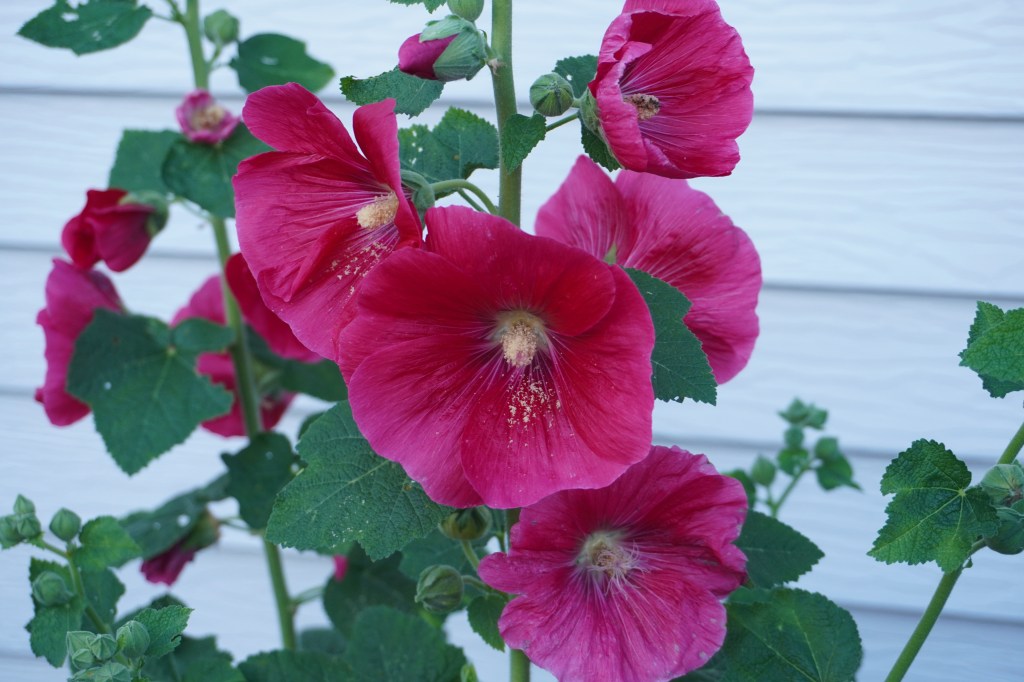
Of course, it’s always great to have someone in our lives that is truly supportive and for this, hollyhocks have the ground in which their roots are stuck strong. For those of us without anyone in our corner, we can start there. We can ask ourselves: what are my roots? In what do I ground myself? The answer will provide your natural source of strength. Here is where you might even find a more supportive community. Blossom alone if you have to (for now) but remember you have the pavement for your footing and if you can stay strong in how you move in the world and in who you are and in what you believe, little bees will eventually come to rest in your petals.


 BRIANNE TURCZYNSKI
I love your hollyhocks and the lessons they taught you. Beautiful!!
LikeLike